

Sync CMS
Copies Magento CMS blocks and pages into the storefront. Run it after you add or edit a CMS block/page in Magento (e.g. a homepage promo, an “About” page, a contact form block).
Magento is the source of truth for your data; the storefront keeps its own copy so it can serve pages fast. The syncs are how you refresh that copy. Run the relevant sync whenever you change something in Magento that the storefront should show.
Sync CMS
Copies Magento CMS blocks and pages into the storefront. Run it after you add or edit a CMS block/page in Magento (e.g. a homepage promo, an “About” page, a contact form block).
Sync Products
Copies product and category data — names, prices, images, attributes, stock. Run it after catalogue changes (new products, price updates, new categories).
Sync Global Data
Copies store-wide settings — store name, currency, contact details, menus/navigation. Run it after changing store configuration or the main menu.
Sync URL Rewrites
Keeps the storefront’s SEO URLs in step with Magento’s URL rewrites so links and redirects resolve correctly. Run it after URL-key or rewrite changes.
Every sync screen works the same way: a short explanation, a big Sync button, and a live readout of how many items were processed. Here’s Sync Products:
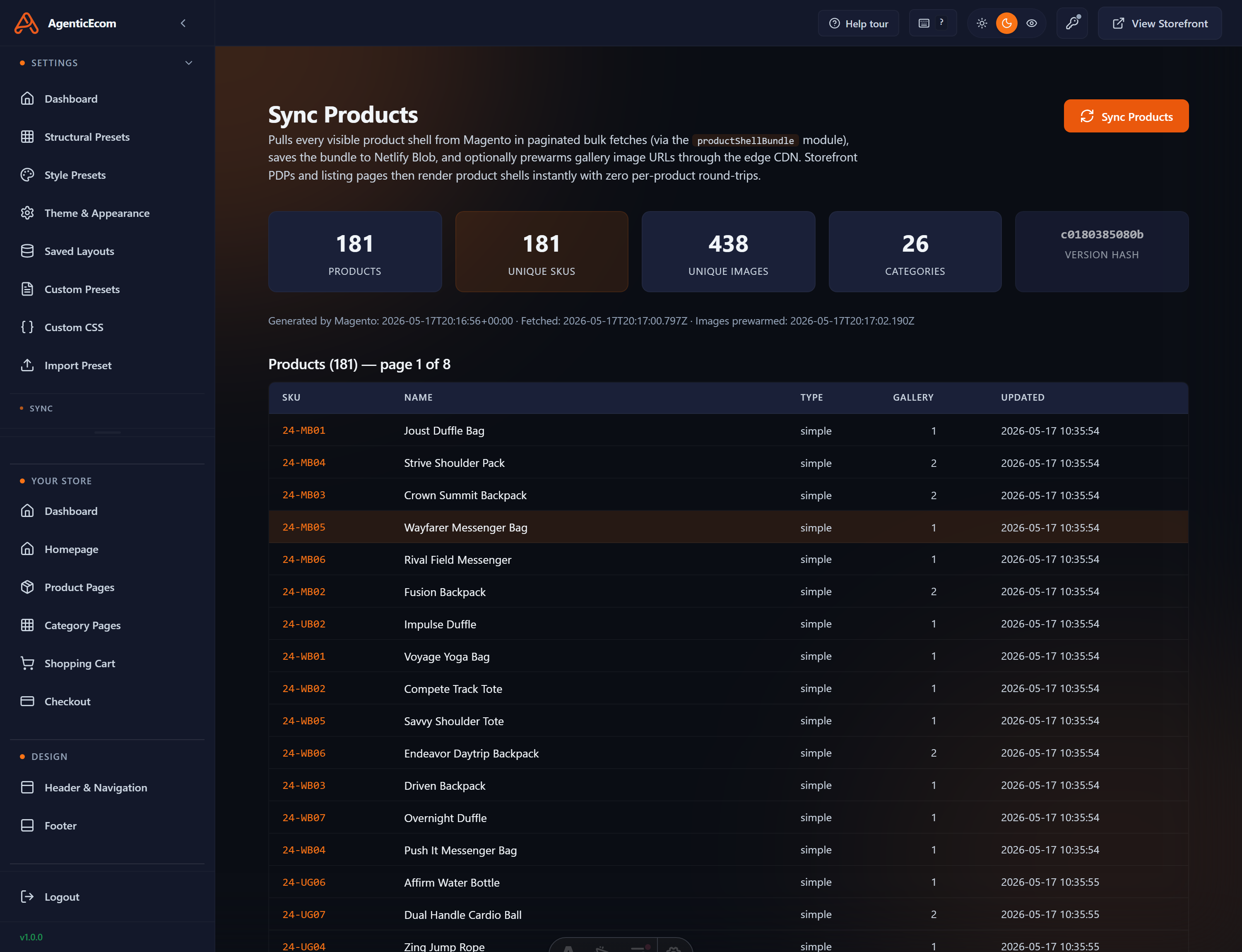
The other syncs look and behave identically — Sync CMS (blocks & pages), Sync Global Data (store name, currency, menus) and Sync URL Rewrites (SEO URLs). Run the one that matches what you changed in Magento.
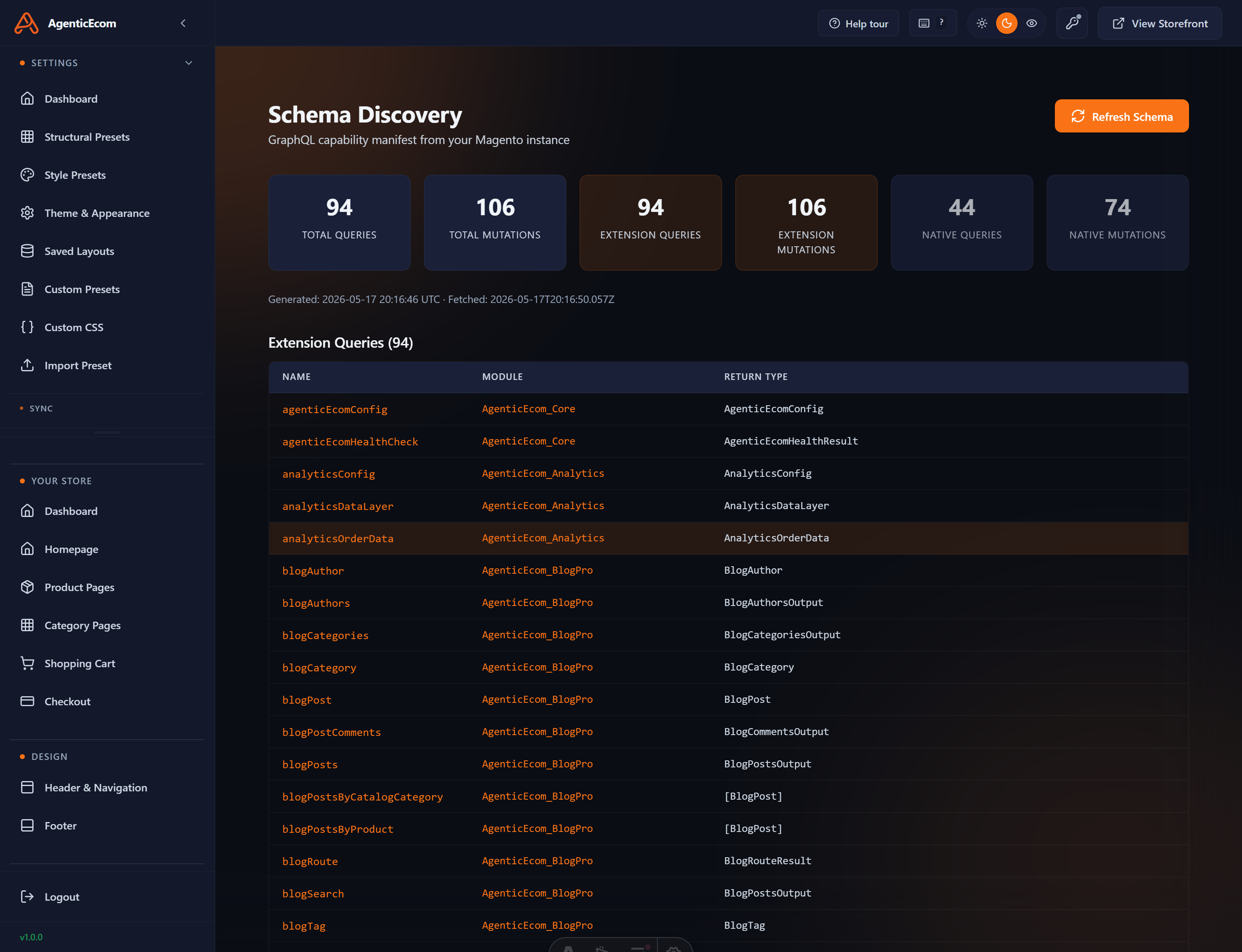
Schema Discovery refreshes the list of available Magento data fields the storefront knows about. Run it after you add custom product/category attributes (or install a module that adds data) so those fields become available to blocks in the editor.
Confirm the change is saved in Magento first (the sync copies what’s saved).
Re-run the specific sync; watch it report how many items it processed.
Prebuild — remember a sync alone never changes the live pages.
If a product still doesn’t appear, check it’s enabled and visible and assigned to the right website in Magento — the storefront only shows what Magento exposes.